If you’re a fan of organic products, you’ve likely come across the USDA label on product packaging many times. Not only is it widely recognized across nearly every country and region, but the USDA itself is among the leading names in the current organic product certification field. So, it’s no surprise that this certification attracts so much attention from both consumers and businesses.
The USDA and the Birth of the National Organic Program (NOP)
Among organic product certification organizations and agencies, the USDA (United States Department of Agriculture) is considered the “oldest,” having been established as far back as 1862 and elevated to a Cabinet-level department in 1889. At that time, the USDA primarily focused on inspecting meat, poultry, and eggs, as well as conducting scientific research to promote productivity and agricultural biotechnology.
It wasn’t until 1990, when the U.S. Congress passed the Organic Foods Production Act (OFPA), that the agency’s research focus began to shift. Finally, between 2000 and 2002, the National Organic Program (NOP) was officially launched, accompanied by the global adoption of the USDA Organic certification label.
So, what is USDA Organic certification?
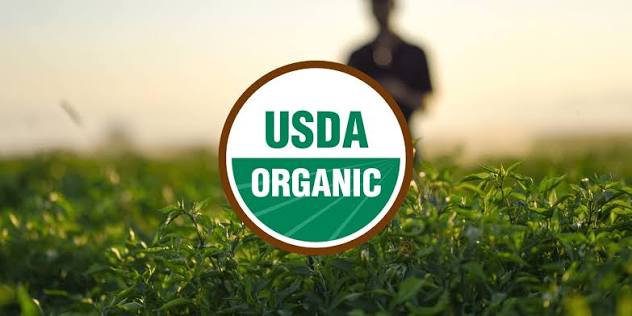
USDA Organic certification is a certification for agricultural products that meet organic standards. Depending on the percentage of organic ingredients, products are labeled as follows:
- 100% Organic: for products containing 100% certified organic ingredients.
- Organic: products must contain at least 95% certified organic ingredients.
- Made with organic ingredients: must contain at least 70% certified organic ingredients. If the percentage is below 70%, the product cannot be labeled as such.
Additionally, the USDA only permits businesses to use certain approved auxiliary products and strictly prohibits the use of harmful chemicals and preservatives in any form to protect both the environment and consumer health.
Why is USDA certification necessary?
As one of the most prestigious certifications in the world, USDA certification not only demonstrates a company’s product quality but also delivers numerous economic, production, and social benefits, such as:
Enhancing credibility
The USDA is renowned for its stringent requirements and rigorous, meticulous, and transparent review processes. Consequently, businesses that successfully obtain this certification can make their products more competitive while instilling confidence in consumers. As a result, both brand image and corporate credibility are significantly enhanced.
Expanding business markets
USDA certification is not only a U.S. organic certification but also holds international recognition and is accepted in many different countries, including the most demanding markets such as Europe and Japan. A product that has obtained USDA certification can easily penetrate larger markets, expand its customer base, and target higher-tier partners.
Sustainable Production

As the trend toward sustainable development gains increasing popularity, the USDA standard serves as a springboard for businesses to embark on this path. Through changes such as establishing long-term organic farming systems, implementing traceability to manage risks, and prioritizing the use of organic ingredients, businesses are embracing a sustainable agricultural model—one that delivers stable profits while benefiting society, people, and the ecological environment.
Conclusion
While the USDA certification is not a mandatory organic certification, it is undoubtedly a “universal visa” that enables businesses to access vast international markets. Moreover, this certification acts as a bridge, fostering trust and strengthening the connection between consumers and businesses.