
As one of the world’s leading green building certifications, LEED’s scope spans virtually the entire globe, featuring a set of strict, clear, and transparent standards that vary depending on the type of building. But how can you become a part of this challenging certification program? Let’s find out in the following article.
Overview of LEED Standards
Leadership in Energy & Environmental Design (LEED) is a set of standards established and managed by the USGBC (U.S. Green Building Council) in 1995. Since then, LEED has grown significantly with the goal of promoting the design and construction of green buildings that minimize environmental impact while ensuring quality of life for people and society.
To date, LEED has successfully established a pivotal role in the global green building sector, setting the international standard for sustainable construction. This certification spans various building types, from public projects to residential homes in over 186 countries, specifically including:
- LEED BD+C (Building Design and Construction): applies to new construction or major renovation projects.
- LEED ID+C (Interior Design and Construction): applies to commercial interior finishing projects (offices, retail, etc.)
- LEED O+M (Building Operations and Maintenance): applies to operational buildings
- LEED ND (Neighborhood Development): applies to urban development projects, mixed-use complexes, etc.
- LEED Homes: applies to single-family homes, or apartment complexes and low-rise residential projects.
LEED Certification Evaluation Criteria
Although there are various project categories, they generally share the same evaluation criteria scoring system. This scoring system is established by LEED to assess specific aspects and rank the sustainability of projects on a total of 110 points. Key criteria include:
-
Sustainable Site Design (26 points)
This criterion focuses on encouraging the use of public transportation over private vehicles to reduce air pollution. For a high score in the sustainable site category, the project site must ensure access to public transportation.
-
Location and Transportation (4 points)
Under the sustainable site location criterion, the project must focus on minimizing environmental impacts on the surrounding area. In other words, businesses should select a location that both conserves natural resources and does not harm the ecosystem.
-
Water Efficiency (10 points)
This criterion encompasses not only water usage during construction but also the assessment of water consumption indoors and outdoors, as well as the use of efficient wastewater treatment systems. Based on these assessments, businesses can identify methods to protect groundwater sources and reduce water consumption in a smart, efficient manner.
-
Energy and Atmosphere (35 points)
One of the most important criteria in LEED is Energy (33 points) and Atmosphere (2 points). Since LEED’s core focus revolves around minimizing the impacts of climate change and environmental pollution, this criterion is prioritized across all building categories.
To achieve high scores in these criteria, businesses must ensure energy efficiency and prioritize the use of renewable energy for lighting systems and sustainable green air filtration.
-
Materials and Resources (10 points)
Instead of materials with environmentally harmful components, LEED encourages the use of recycled, natural, or sustainable materials such as FSC-certified wood, PEFC-certified wood, etc., during construction and interior design.
-
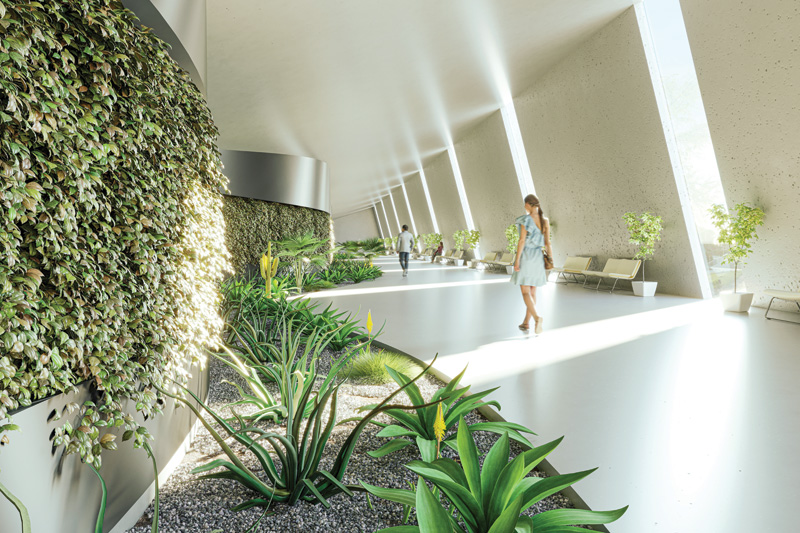
Indoor Environmental Quality (15 points)
As the name suggests, this criterion focuses on indoor air quality metrics related to humidity, lighting, and temperature within the building. It primarily emphasizes ensuring the long-term safety of occupants through specific requirements, including maintaining air quality, minimizing noise, and limiting light pollution.
-
Innovation (6 points)
This criterion was established to recognize and reward projects with outstanding design solutions that not only ensure the building’s aesthetic innovation but also enhance environmental and social performance.
Additionally, LEED includes other sub-criteria such as Priority Areas and Integrated Processes,… To obtain the lowest level of LEED certification (Certified), a company must achieve at least 40 points. Certification levels increase based on the points earned: Silver (50–59 points), Gold (60–79 points), and Platinum (80 points or more).
Conclusion
LEED’s leading position in the field of international green building certification has been recognized by many businesses and countries, as this certification ensures transparency while establishing foundational standards for the entire green building system. If you wish to participate in sustainable green building projects to help protect the environment and society, don’t overlook LEED.