Although it is not the first green certification in the world, LEED has clearly established a solid position and even taken the lead in the current green building sector. So, what exactly is LEED?
The History of LEED
LEED stands for Leadership in Energy and Environmental Design, an international standard for green buildings managed by the U.S. Green Building Council (USGBC). When it was first established in 1993, the USGBC began developing this standard, but it wasn’t until 1998 that it was first piloted. In 2000, LEED was officially launched on a large scale, transitioning into a commercial certification system and gradually expanding its certification scope worldwide.
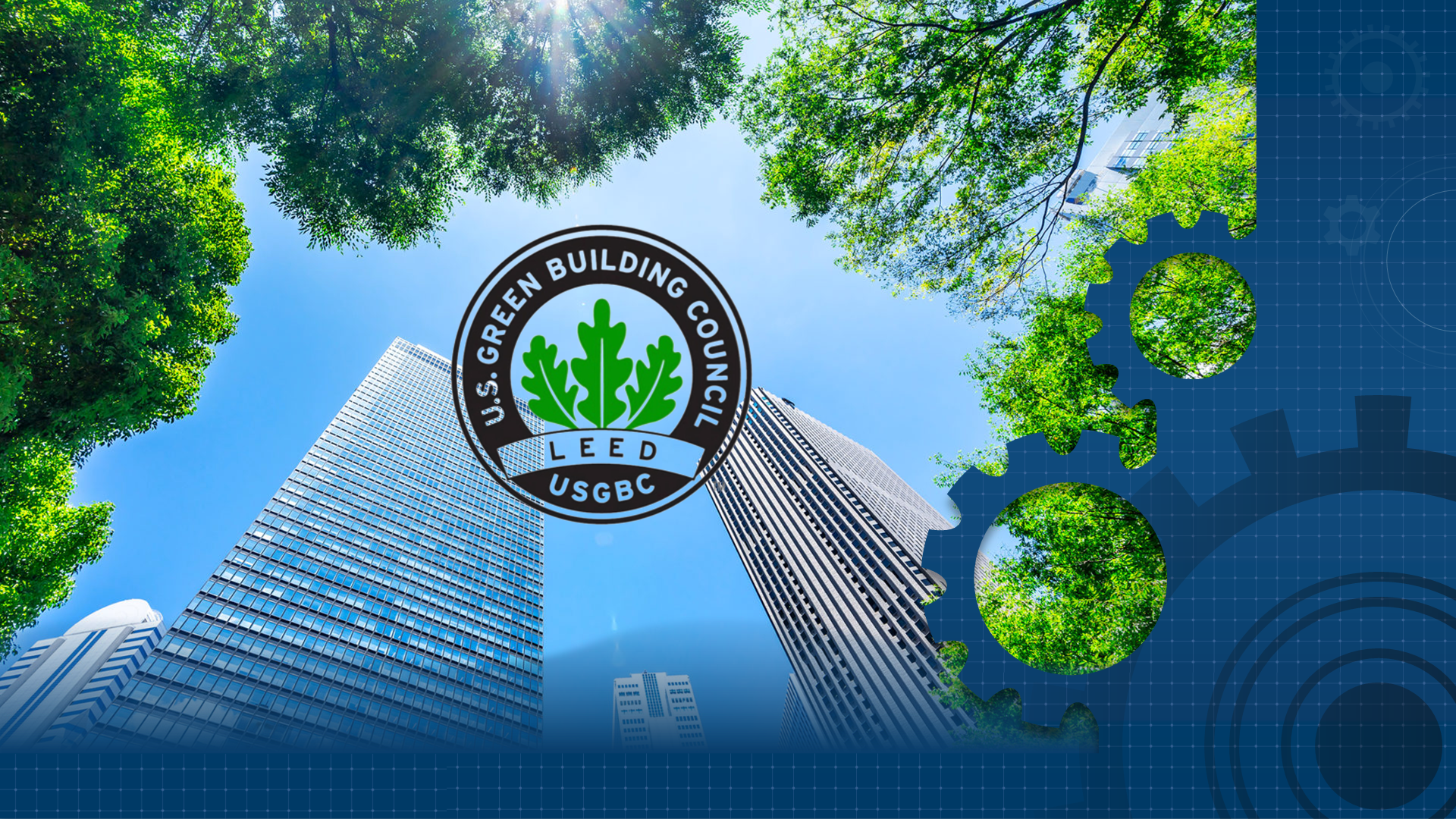
From that time until now, the USGBC has continuously introduced major improvements to the LEED system and standards to ensure a deeper focus on environmental issues and climate change. These improvements, coupled with strict inspection regulations, have helped LEED rise to a position of importance not only for U.S. businesses but also worldwide.
Goals and Mission
Currently, most environmental issues stem from industrial waste and the construction sector. Therefore, controlling buildings and structures from the construction phase through to operation is of utmost importance. The LEED standards, along with a comprehensive evaluation system covering all phases, will help optimize every aspect to the best possible extent.
However, LEED does not merely emphasize environmental and resource-related issues or promote the use of sustainable, renewable materials; it also places a strong emphasis on human health and individual well-being. This supports community equity while enhancing overall social quality of life.
In the LEED rating system, approximately 35% of the criteria focus on climate change, 20% on human health, 15% on water resource impacts, 10% on biodiversity, 10% on the green economy, and 5% on community and natural resources. Additionally, LEED includes several other criteria related to carbon.
LEED Certification Categories
Certification
Despite its long history and strong standing in the international green building market, this standard continues to innovate to meet evolving environmental needs. This has naturally led to LEED developing its own standardized scoring system with diverse certification categories. As of the latest update, LEED offers five main certification categories tailored to different building needs, specifically:
- LEED BD+C (Building Design and Construction): applies to new construction or major renovation projects.
- LEED ID+C (Interior Design and Construction): applies to commercial interior finishing projects (offices, retail, etc.)
- LEED O+M (Building Operations and Maintenance): applies to buildings currently in operation
- LEED ND (Neighborhood Development): applies to urban development projects, mixed-use complexes, etc.
- LEED Homes: applies to single-family homes, or multi-family housing and low-rise residential projects.
Standard Point Scale
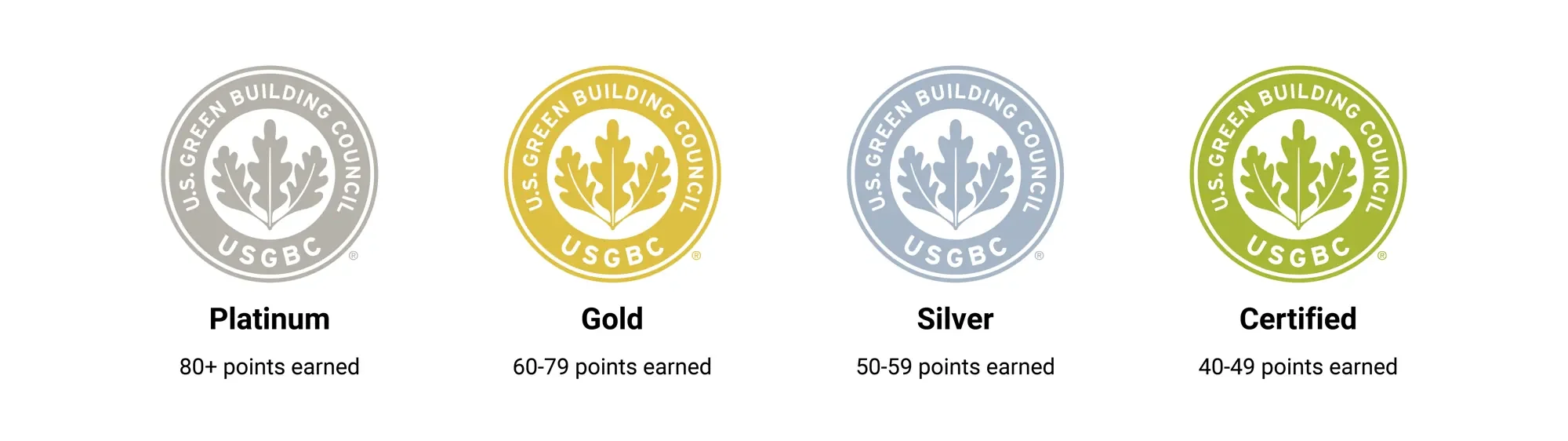
For new construction and major renovations, LEED issues certification at different levels based on the following point scale:
- Certified: 40–49 points
- Silver: 50–59 points
- Gold: 60–79 points
- Platinum: 80 points or higher
Depending on the project’s model and objectives, businesses can choose to improve their scores to achieve certification at a level that meets their needs. Naturally, higher levels come with stricter criteria, but they also offer benefits not only in terms of the company’s reputation in the international green market but also for society and the ecological environment.
What are the benefits of this certification?
LEED’s stringent criteria for energy management and conservation play a crucial role in helping certified buildings achieve lower operating costs compared to the industry average. Additionally, a LEED-certified building more easily gains the trust of businesses worldwide, enhancing its value on the global stage.
Furthermore, LEED ensures that its buildings meet standards related to human health, such as indoor air quality and building materials. This not only improves human health and community well-being but also contributes to preserving ecosystems and protecting the surrounding environment.
Conclusion
With its strong growth, LEED is becoming increasingly successful in building a sustainable green world by setting global standards for green buildings. This certification serves as the key to unlocking a superior ecological solution that aligns with economic, community, and social benefits.