In recent years, as environmental issues have garnered increasing global attention, many luxury brands have begun implementing initiatives to make their production chains more sustainable. To demonstrate this sustainability and build trust with consumers, sustainability certifications for luxury brands have emerged, with the Butterfly Mark standing out among them.
Going Against the Grain
In stark contrast to today, back in 2011, the concept of sustainable development was not yet widely embraced or deeply ingrained globally. Moreover, this philosophy was often viewed as unfashionable, as most brands feared that associating their products with ecological factors would undermine their luxurious image and market positioning.
Partly because they disagreed with that view, and partly out of a desire to protect ecosystems, the two founders, Diana Verde Nieto and Karen Hanton MBE, co-founded Positive Luxury and the Butterfly Mark sustainability certification. Although it has only been in operation for just over a decade, Positive Luxury has helped demonstrate that true luxury must go hand in hand with a commitment to protecting the environment, society, people, and animals.
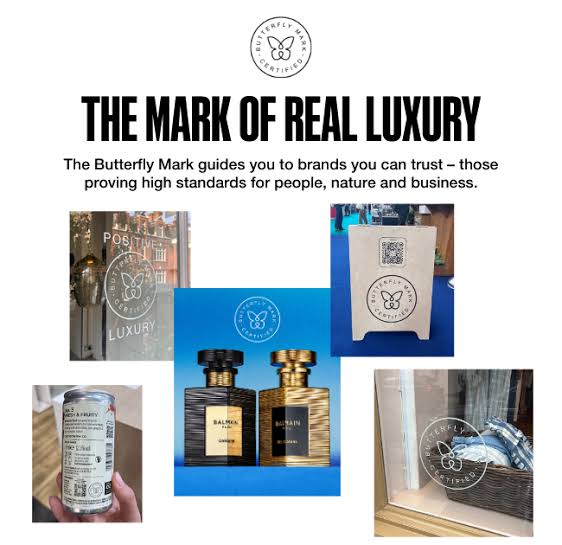
This has elevated the definition of sustainable development in the eyes of luxury brands and consumers alike, making the Butterfly Mark one of the most trusted sustainability certifications today. Along with its ever-growing reputation, Positive Luxury is also gradually implementing a new technology—the Butterfly Digital Passport. This passport allows consumers to access detailed sustainability data right at the point of purchase, making it easier than ever to track and consume sustainable products.
Symbolic Meaning
When you see the logo or hear the name “Butterfly Mark,” you’ve likely wondered at least once: why a butterfly? Positive Luxury chose this image to evoke the miraculous story of the large blue butterfly, which was declared extinct in England in 1979. But thanks to relentless effort and dedication, scientists ultimately succeeded in naturally “reviving” the large blue butterfly.
This miracle not only became the world’s most successful symbol of insect rebirth but also deeply moved Princess Diana, laying the foundation of hope for sustainable development in the luxury goods market. For Diana in particular and Positive Luxury as a whole, the Butterfly Mark represents unity, confidence, and a commitment from all parties to work together to counteract the negative impacts humans have left on our planet over the years.
How does the Butterfly Mark evaluate brands?
Aimed at the noble goal of protecting ecosystems, the Butterfly Mark certification has its own specific evaluation criteria, and brands seeking this certification must fully meet these stringent requirements. Among these, the three most essential criteria are:
+ ESG Assessment Framework: Brands must achieve a minimum score of 50% in each individual category within the globally recognized ESG (Environmental, Social, and Governance) framework. This requires brands to maintain a balance between economic, social, and environmental considerations—producing high-quality, environmentally friendly products while ensuring the rights and interests of both workers and consumers. Additionally, to accommodate all businesses, ESG requirements will be adjusted based on operational scale and industry sector.
+ Verifiable Evidence: All information and data submitted by brands for review must be backed by certifications or factual evidence demonstrating compliance throughout the entire process—from the sourcing stage to the product reaching the consumer.
+ Participation Fee: Brands will be required to pay an annual fee based on their revenue to maintain the certification process.
To ensure the transparency of the certification, the Butterfly Mark is valid for only two years. After this period, the brand must undergo re-certification to retain the certification. Through this process, the Butterfly Mark compels brands to consistently uphold and continuously improve their policies and production processes.
Conclusion
Although it is not a long-established sustainability certification, through its persistent efforts, the Butterfly Mark has made countless contributions to the journey of protecting the environment and ecosystems. Luxury businesses and brands around the world can also easily obtain this certification, spreading their message and promoting their eco-friendly products to consumers.