ISO and ISO standards are among the certifications that businesses and organizations are most interested in today. This certification is like a ticket for the circulation and trading of goods and services that can be used worldwide. However, each country has different ISO standards. Let’s explore the ISO standards currently popular in Vietnam in the following article.
Information about ISO and ISO standards
Founded in 1947 with its headquarters in Geneva, Switzerland, ISO (International Organization for Standardization) is an international organization dedicated to establishing global standards for trade and industry. Based on the ISO standards set, businesses and organizations can easily exchange goods and services internationally while consumers are protected and assured of the quality of goods and services.
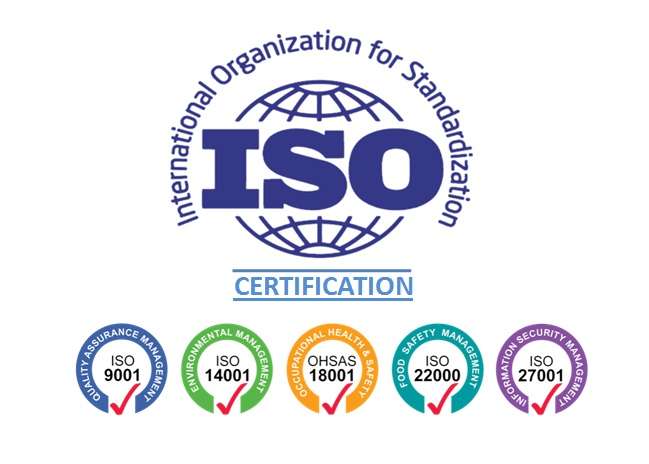
Due to its convenience, ISO standards have gradually become widely used in all fields in most countries. To date, ISO has more than 164 member countries with over 22,000 standards issued covering a wide range of products, services, technologies, and environments around the world, including Vietnam.
Common ISO standards in Vietnam
Each country has its own economic strengths. This leads to different ISO standards being prevalent in different countries, depending on their development priorities. In Vietnam, the common ISO standards include:
ISO 9001: 2015 – Quality management system
As its name suggests, the ISO 9001 standard is a certification that proves a business or organization has successfully established and implemented an internationally recognized quality management system. This certification has no restrictions on applicants and applies to all businesses and organizations, from private to state-owned.
The ISO 9001 standard aims to help businesses and organizations improve productivity by standardizing and optimizing operational processes. It contributes to enhancing competitiveness and expanding the business market for businesses and organizations.
ISO 14001: 2015 – Environmental Management System
The environmental management system of the ISO 14001 standard was created with the purpose of supporting businesses in identifying, controlling, and minimizing their impact on the environment from exploitation to production and business processes. A business or organization that receives ISO 14001 certification must comply with legal regulations and always be responsible for the ecological environment.
ISO 45001: 2018 Standard – Occupational Health and Safety Management System
While ISO 9001 focuses on management, ISO 45001 delves into employee health and rights. This standard concentrates on identifying potential hazards and risks that may occur during the work process. From there, it aims to prevent them in advance to create a safe working environment for employees.
ISO 22000: 2018 – Food Safety Management System
This is a standard specifically for businesses and organizations operating in the food industry. With ISO 22000, businesses and organizations must ensure that they meet hygiene and safety requirements not only for the final product but also for all stages of extraction and production. Because it relates to consumer health, the ISO 22000 standard is relatively strict and rigorous, requiring many core elements, including: interactive communication, system management, PRPs (Prerequisite Programs), and HACCP principles.
ISO 27001: 2013 Standard – Information Security Management System
The ISO 27001 standard targets CIA in security, meaning the confidentiality, integrity, and availability of information. Typically, one might think this standard is more necessary for IT companies, but in reality, information security is an important process that any business or organization should have to better protect their data, assets, and employees.
ISO 13485: 2016 Standard – Quality Management System – Medical devices
Alongside food, healthcare is another field with relatively stringent standards. Built upon the ISO 9001 standard, ISO 13485 incorporates additional specialized and stricter healthcare-specific elements. This standard primarily focuses on safety, performance, and compliance with legal and regulatory requirements set by both local and international healthcare authorities.
ISO 50001: 2018 – Energy Management System
Alongside the ISO 14001 environmental standard, there is the ISO 50001 energy standard. However, this standard primarily aims to help organizations use energy efficiently in production and business. This contributes to economic benefits by saving costs while reducing the environmental impact caused by high energy consumption.
Conclusion
ISO standards are among the standards that businesses and organizations need to have if they want to expand their business market internationally or seek large potential customers and partners. Additionally, in Vietnam, there are several sectors where businesses and organizations are required to obtain ISO certification to operate legally. Therefore, businesses and organizations should thoroughly research to select the ISO standard that best suits their needs.