
As a Type III ecolabel, EPD certification is considered one of the most stringent environmental certifications globally, with requirements for transparency and standards that exceed those of well-known certifications such as SGLS, Blue Angel, or Green Seal. So what makes this certification so special? Let this article reveal the secret to you.
Understanding EPD certification
Overview of LCA
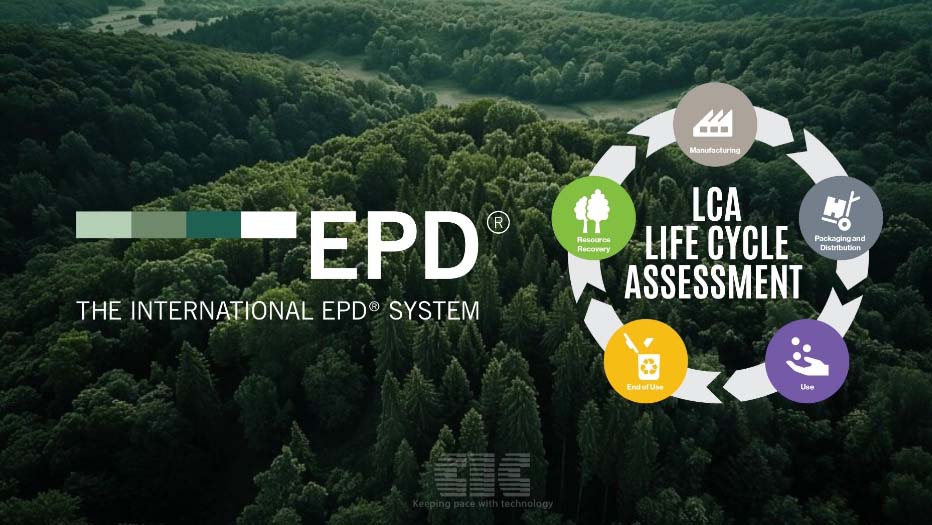
To fully understand EPD, we first need to explore the concept of LCA (Life Cycle Assessment). As its name suggests, LCA is a report measuring the environmental impacts a product causes throughout its lifecycle, modeled across the following stages:
- Product (A1-A3): impacts arising from raw materials during production.
- Construction (A4-A5): includes impacts generated by transportation, installation, and construction.
- Using product (B1-B7): how the product affects the environment when consumers use it or during maintenance, repair, and replacement.
- End of life (C1-C4): impacts from demolition, transportation to waste disposal sites, or recovery and destruction processes.
LCA measures all environmental issues. The most prominent and emphasized issues are global warming due to greenhouse gases, depletion of natural resources, and impacts from emissions of toxic chemicals, eutrophication, and climate change-induced natural disasters.
What is an EPD?
An EPD (Environmental Product Declaration) is a complete set of documentation based on international standards such as ISO 14024, EN 15804, etc. The objective of EPD is to provide comprehensive, clear, and verified information about the environmental impact of a product or service.
The concept of EPD began in the 1990s when Type III ecolabels were introduced to help businesses objectively compare the sustainability of products. However, it was not until 1998 that the first EPD was published and made publicly available on the EPD International system. Currently, the EPD system has reviewed and published more than 10,000 reports from thousands of businesses around the world.
It can be said that LCA is a crucial and decisive part of the EPD portfolio because it demonstrates the environmental performance of a product at every stage of its life cycle. Based on the results of the LCA report, we can ensure the transparency and reliability of the environmental information provided by businesses.
The value of EPD
For businesses
Based on the strict standards of EPD and LCA reports, businesses can self-assess and evaluate the environmental impact factors of their products. When comparing with other products and services, businesses can learn and improve day by day.
Additionally, since EPD records are fully disclosed on the EPD website, products and services with this certification build credibility and trust among consumers and business partners. EPD is even a mandatory requirement for products exported to Europe or when businesses participate in LEED and BREEAM programs.
For customers
Since all product information is clearly and transparently disclosed, consumers can easily research and select products that meet their needs. This facilitates consumers who wish to pursue a sustainable lifestyle without worrying about greenwashing or choosing products that do not meet environmental quality standards.
For the environment
EPD sets out specific principles that enable businesses to not only save energy and conserve fossil resources, but also contribute to reducing waste and toxic chemicals in the production process while increasing product recycling rates. Therefore, every product that obtains EPD certification is proof of a commitment to and strict implementation of environmental regulations aimed at preserving the ecosystem and human health.
EPD review criteria
Depending on the product classification, EPD will have different sets of standards, but in summary, businesses must meet the following strict common environmental criteria:
- GWaste reduction: Throughout the process from raw material collection to waste disposal, businesses must ensure that emissions and toxic chemicals in product components are kept to a minimum, causing no harm to the environment or human health.
- Energy efficiency: Prioritize the use of energy-saving technologies and production processes.
- Use eco-friendly materials: Instead of fossil fuels and wood resources, which are gradually becoming depleted, EPD encourages businesses to use available resources such as sugarcane, bamboo, etc., or recycled materials to limit emissions into the environment during new extraction and minimize resource waste.
- Supply chain management: To minimize environmental impact, EPD requires that a company’s supply chain be managed in the most sustainable and environmentally friendly way possible.
Conclusion
It is evident that EPD certification, with its strict environmental rules and standards, has won over many consumers and businesses, even the most demanding green programs and organizations. And it is precisely because of this strictness that EPD has helped each business and consumer take a significant step forward on the path to protecting the ecological environment.