
When it comes to sustainability and eco-friendly certifications in the textile industry, alongside GOTS, OEKO-TEX is also considered a “giant in the field.” However, while GOTS focuses more on the ecological environment with the organic textile market, OEKO-TEX, specializing in textiles and leather, pays more attention to consumer welfare.
Learn about OEKO-TEX
OEKO-TEX was launched in 1992 by the Hohenstein Testing Institute in Germany and the Institute für Oekologie, Technik und Innovation ÖTI (Vienna, Austria) amid growing concerns about greenwashing. To meet consumer demand for high-quality and safe textile products, OEKO-TEX has created globally recognized standards to objectively and transparently evaluate raw materials, semi-finished products, and finished goods in the textile industry.
This certification pursues the mission of connecting consumers with products that are harmless to health and the ecosystem while still possessing good and stable quality. OEKO-TEX builds consumer confidence in purchasing, thereby promoting sustainable, eco-friendly textile trends.
OEKO-TEX Certification Categories
Operating for over three decades, OEKO-TEX continues to innovate and regularly update its certification categories and standards to align with consumer needs across different product segments. Below are some of the most prominent OEKO-TEX certification categories:
- OEKO-TEX Standard 100: This certification informs consumers that all components of the product meet safety standards, from fabrics and threads to coatings. OEKO-TEX Standard 100 includes four smaller groups categorized by user group with different safety criteria. The most stringent is Group I, for infants and children up to 36 months old. Currently, OEKO-TEX Standard 100 is considered the global benchmark for quality and safety in the textile industry and is also the organization’s most popular certification.
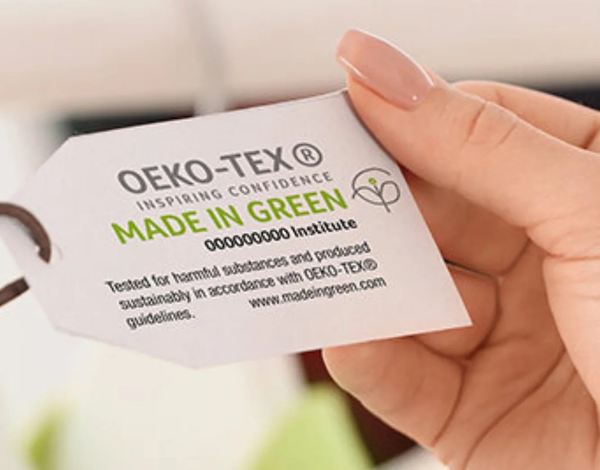
- OEKO-TEX MADE IN GREEN: As its name suggests, this certification focuses not only on consumer health but also on environmental and social responsibility throughout the production process. Businesses must comply with eco-friendly production conditions that do not harm the ecosystem while ensuring the rights and fulfilling the legal obligations of workers.
- OEKO-TEX LEATHER STANDARD: This is a certification created by OEKO-TEX specifically for leather products and products containing leather. OEKO-TEX LEATHER STANDARD revolves around protecting consumer health from harmful chemicals similar to OEKO-TEX Standard 100 but is adjusted to be more suitable for leather materials.
- OEKO-TEX DETOX TO ZERO: Not targeting specific products, OEKO-TEX DETOX TO ZERO is a program primarily focused on business management processes. This program provides businesses with a structured management system that minimizes the use of harmful chemicals in the production process. This helps businesses move towards safe, sustainable, and eco-friendly management and production practices.
Why is OEKO-TEX important?
As a long-standing international certification in the textile industry, OEKO-TEX has a certain influence on both consumers and businesses worldwide. However, OEKO-TEX is even more important as it not only contributes to building a credible bridge between consumers and green businesses, but also:
- Promoting transparency: As a third-party organization, OEKO-TEX ensures that all product evaluation and testing processes are transparent and clear. The organization itself also encourages businesses to ensure transparency in all activities, from production and business operations to employee rights.
- Prevents greenwashing: With greenwashing to profit from consumers becoming increasingly common, OEKO-TEX helps consumers feel confident in their product choices thanks to the strict standards products must meet to obtain certification.
- Social and environmental responsibility: In addition to providing quality and health-safe products, OEKO TEX also encourages and advocates for businesses to implement sustainable management to protect the ecosystem while complying with the law and fulfilling their obligations to workers.
Conclusion
The trend toward sustainable development has brought many benefits not only to the ecological environment and human health but also to long-term business profits, as we no longer have to worry about resource depletion and climate change. So, don’t hesitate to choose a green lifestyle with products that have achieved international sustainability certifications such as OEKO-TEX.