
In recent years, due to the severe impacts of climate change, most businesses have been seeking to gradually transition to more sustainable and eco-friendly business practices. Consequently, green certifications and environmental certifications have become increasingly sought after. And, of course, PAS 2060 and its standards for helping businesses achieve carbon neutrality cannot be overlooked.
The concept of carbon neutrality
As we know, the primary cause of climate change is the greenhouse effect, with CO2 accounting for the majority of these emissions. Therefore, to minimize the greenhouse effect as much as possible during operations, the carbon neutrality strategy was developed to balance the CO2 emissions generated by a business with the amount of emissions removed or offset through technological initiatives.
Unlike Zero Carbon (Net-Zero Emissions), which focuses on all greenhouse gases, carbon neutrality focuses solely on the CO2 component of greenhouse gases. Additionally, carbon neutrality itself does not have the same stringent environmental requirements or standards as Zero Carbon. However, this certification serves as a foundation for businesses to move toward Zero Carbon in the future.
PAS 2060 Certification
PAS 2060 (Publicly Available Specification 2060) is a set of standards first published by the British Standards Institution (BSI) in 2010 and updated in 2014. This standard was established to provide support and detailed guidance on carbon neutrality, while also helping to verify the carbon neutrality of organizations, products, or events seeking to demonstrate that their operations have achieved carbon balance.
The Principles of PAS 2060
The PAS 2060 standard primarily focuses on carbon neutrality and minimizing the impacts of climate change. Consequently, the core principles of this standard center on greenhouse gas emissions across four key stages.
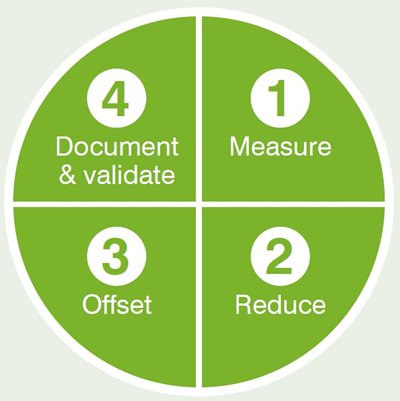
Measuring Emissions
First, businesses must measure the amount of emissions they release into the environment using the methods outlined in PAS 2060. This includes both identifying and calculating all types of carbon emissions generated by the event, product, or service.
Reducing Emissions
Once the amount of emissions has been determined, businesses must then use this data to set emission reduction targets aimed at minimizing environmental impact. Emission reduction targets must be established objectively and in a manner that allows for evaluation and feedback by an independent third party. A valid reduction strategy is one that ensures the following information is fully addressed:
- A timeline
- Specific reduction targets.
- Planned measures to achieve the reductions.
- How remaining emissions will be offset.
Offsetting
If a business is unable to fully reduce its carbon emissions, the remaining emissions will be offset using carbon credits. However, these credits must meet the following criteria:
- Be part of an approved PAS 2060 plan.
- Be supplementary.
- Be verified by an independent third party to ensure the emission reductions are permanent.
- Undergo a review process lasting at least 12 months.
Through this offsetting process, the business will achieve carbon neutrality.
Documentation and Verification
This is the final stage for a business to obtain PAS 2060 certification. The business must transparently disclose all supporting documentation: emission reductions, canceled carbon credits, carbon footprint reports, carbon management plans, and QES.
At this stage, the business may self-verify; however, due to frequent doubts regarding transparency, third-party verification—particularly by an independent third party—is strongly recommended. This enhances the business’s credibility and makes a stronger impression on global partners and customers.
Benefits of Holding PAS 2060 Certification
PAS 2060 certification provides businesses with international recognition while helping them enhance their reputation and brand image with partners and customers. This is because it is currently the only internationally recognized standard for carbon neutrality.
Additionally, adhering to PAS 2060 standards helps businesses conserve energy and operate more stably in the face of dwindling fossil fuel resources and the severe impacts of climate change. Above all, every project, product, or service a business undertakes through the PAS 2060 standard represents an opportunity to reduce carbon emissions into the environment and successfully protect the ecological environment.
Conclusion
For businesses seeking a development path that minimizes environmental impact or aims for a Zero Carbon future, the PAS 2060 standards serve as a crucial foundation for achieving those goals. And beyond helping businesses reduce emissions, PAS 2060 also acts as a recognition of their efforts in environmental protection.