Climate change, global warming, and increasingly frequent natural disasters are all serious consequences of the greenhouse effect on our planet. For this reason, reducing greenhouse gas emissions is a priority being actively promoted across nearly every aspect of life. And accompanying us on this journey to reduce emissions is the Zero Carbon Certificate.
What is Zero Carbon?
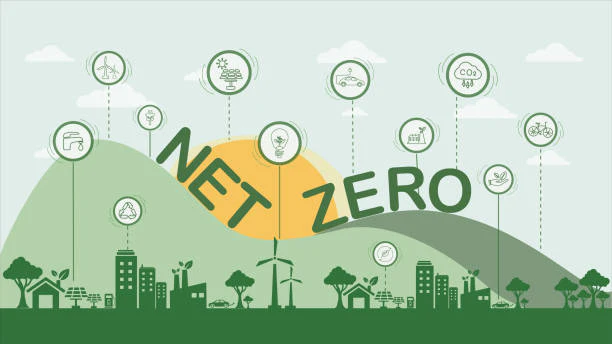
Zero Carbon (Net Zero) or Net Zero Emissions refers to a state of balance between the amount of greenhouse gases emitted from human activities and the amount of emissions removed from the atmosphere. Instead of the nearly impossible goal of completely eliminating emissions, we focus on minimizing greenhouse gas emissions as much as possible and offsetting the remainder through measures such as reforestation and carbon capture technologies to prevent climate change.
Typically, when discussing Zero Carbon, we also encounter other classifications of carbon certifications, notably:
- Carbon Neutral: A form of emissions offset similar to Zero Carbon but focused specifically on CO2 rather than greenhouse gases in general.
- Carbon Free: Generates absolutely no CO2 throughout the entire operational process. However, achieving Carbon Free typically requires significant capital investment along with advanced technology and specific technical expertise, making it extremely difficult to attain.
The Emergence of Zero Carbon Certification
As early as the 1990s, environmental issues were already a pressing concern. However, rather than focusing on addressing greenhouse gases, efforts primarily centered on developing systems and standards related to energy conservation.
It wasn’t until 2015, following the impact of the Paris Agreement, that projects related to emissions were officially prioritized. In 2016, the concept of Net Zero was first introduced in the “Advancing Net Zero” project launched by the World Green Building Council. Subsequently, the first specialized standard, the Zero Carbon Building Standard, was established by the Canada Green Building Council, marking a milestone in the widespread international adoption of this certification.
Shortly thereafter, Zero Carbon quickly gained global acceptance due to the environmental benefits it offers. Many countries around the world have joined efforts to promote the Zero Carbon initiative, including Vietnam, which aims to achieve this status by 2050.
What Zero Carbon Requires
Zero Carbon certification requirements may vary depending on the certifying body, but generally, the certification will always include key requirements regarding:
- Energy efficiency: Must meet performance targets that exceed standard building codes.
- Limiting on-site fuel combustion: The complete elimination of direct fossil fuel combustion at the facility is a requirement in most Zero Carbon certification programs.
- Prioritizing 100% renewable energy: Since emissions from fossil fuel extraction are relatively high, Zero Carbon certification requires businesses to operate entirely on new renewable energy, with no restrictions on self-generation or purchasing from other suppliers.
- Carbon Offsetting: All emissions that cannot be completely eliminated must be disclosed, and a plan must be established to achieve carbon neutrality through carbon offsets or the use of technologies and materials with appropriate carbon sequestration capabilities.
Organizations that provide certification
To date, the Zero Carbon certification has been recognized worldwide, and to ensure transparency and clarity, it is typically issued by a third party—non-profit international organizations. Notable international organizations include:
- International Living Future Institute (ILFI): ILFI’s Zero Carbon certification is the first to require complete carbon neutrality in building materials and throughout the entire operational lifecycle.
- U.S. Green Building Council (USGBC): One of the most sought-after Zero Carbon certifications globally—LEED Zero Carbon. For this certification, net-zero emissions targets must be assessed and verified based on actual operational data over a 12-month period.
- Canada Green Building Council (CAGBC): This is also the organization that established the world’s first Zero Carbon standard, featuring two distinct categories: Design and Operational Performance.
- EDGE (Excellence in Design or Greater Efficiencies): A certification for projects achieving 100% renewable energy and high efficiency in emerging markets, provided by the World Bank’s IFC.
Conclusion
The existence of Zero Carbon certification acts as a breath of fresh air, helping to mitigate the critical greenhouse gas effect. With rigorous evaluation standards and transparent inspection processes, Zero Carbon is guiding businesses toward sustainable development, paving the way for a better world in the future.