Currently, PEFC certification is among the world’s leading forest protection programs, attracting thousands of businesses, forest owners, and global plantations to register for participation. Accordingly, depending on member needs, this organization has also begun to offer different certification programs to meet increasingly diverse certification demands. So what are these programs? Let’s find out in the following article.
Overview of the PEFC Organization
In response to rampant deforestation and illegal timber trade, the non-profit organization The Programme for the Endorsement of Forest Certification (PEFC) was established in France in 1999. PEFC was created with the goal of minimizing the above situation by ensuring that the logging and conservation activities of plantations and owners remain within the scope of international environmental standards. From there, it contributes to promoting sustainable forest development and protecting ecosystems.
Throughout its history to date, PEFC has certified over 296 million hectares of forest with 91 participating members, including:
- 57 independent national members applying PEFC standards, including Vietnam.
- 34 members are international organizations, including businesses and non-profit organizations with policies and operational objectives aligned with PEFC standards.
What benefits does PEFC offer?
In the process of providing certification to businesses, in addition to setting strict rules, PEFC also acts as a completely independent and transparent third-party verifier. Forests and plantations with this certification must meet sustainable management standards and be verified by experts annually. Therefore, this non-profit organization helps its members maintain a balance between profit generation and the protection of forest environments and ecosystems.
For consumers, this certification provides peace of mind when shopping. Owning a product labeled with this certification means that consumers are contributing to supporting businesses that manage forests sustainably, without harming the ecosystem, instead of contributing to deforestation with products of unknown origin.
Popular PEFC programs
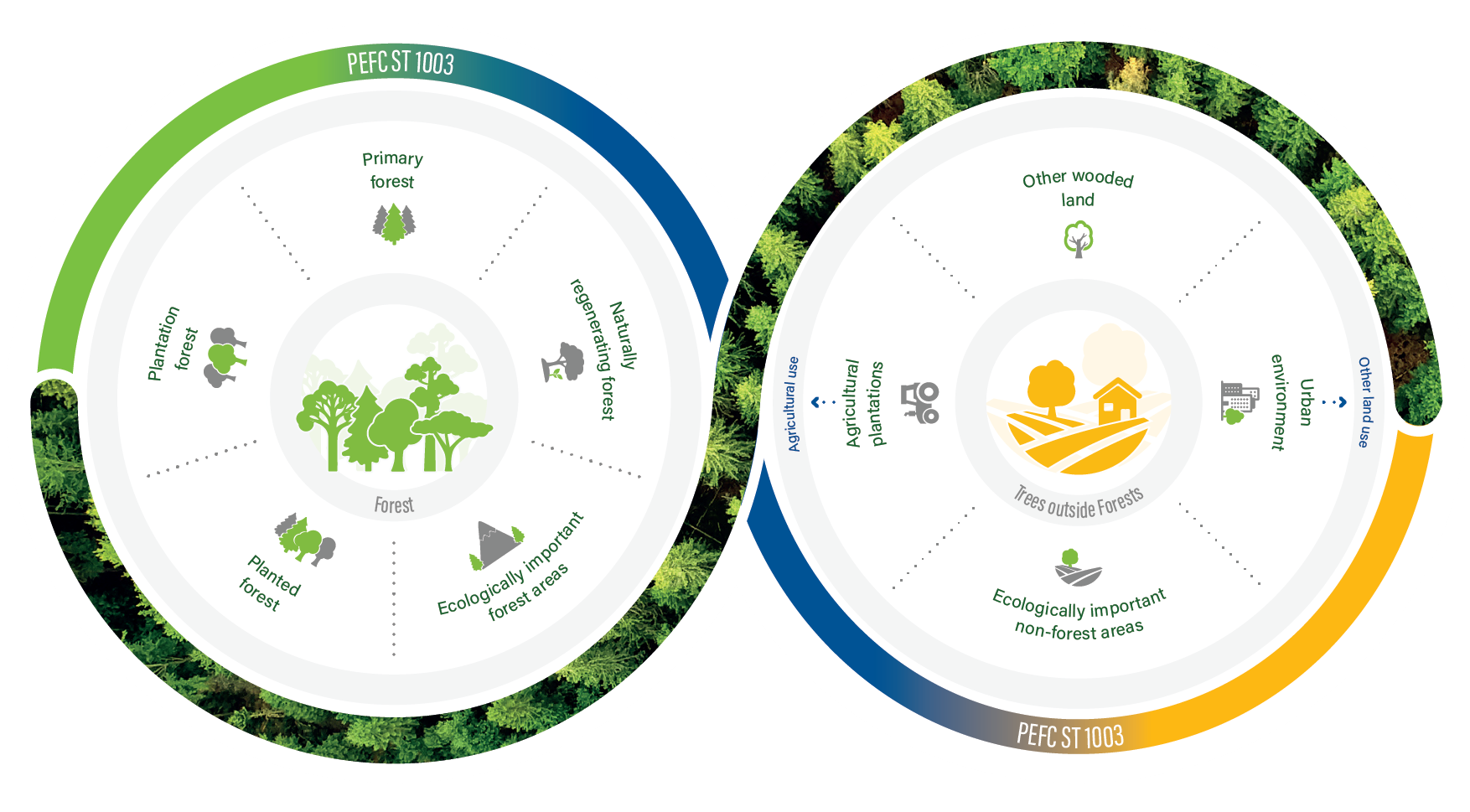
As one of the most popular and reputable forest certifications worldwide alongside FSC, it is no surprise that many businesses with diverse needs seek this certification. Therefore, based on business needs, the non-profit organization FSC has introduced various certification programs, primarily divided into two types:
PEFC chain of custody certification – PEFC Coc (PEFC Product Chain of Custody Certification)
As the name suggests, this certification program focuses on verifying whether the forest materials in a product are clearly sourced or come from sustainably managed forests. The PEFC – Coc certification is typically for manufacturing companies, and depending on the company’s scale, the certification offers different options:
- Certification for small companies: Also known as group certification, this certification program is specifically for small companies with no more than 50 employees and total revenue not exceeding EUR 10 million. It enables all businesses to participate in this program. Any company located in the same country can also become a member of the group certification.
- Multi-site company certification: The company has the discretion to decide which sites to certify, but these sites must be linked through common ownership or management or affiliation with another organization.
- PEFC Coc Product Chain of Custody certification: Here, a “project” is certified, meaning a project applies to the product chain of custody process, and the holder of that certification will have project management status. Contractors or other parties involved in the project are Project Members and are not required to hold product chain of custody certification.
PEFC Sustainable forest management certification – PEFC FM
Unlike Coc, which targets manufacturing companies, PEFC FM is specifically for forest owners and plantation owners. With this kind of certification, forest owners and plantation owners can ensure that their forest management processes comply with global sustainability standards, maintaining a clear balance between profit and environmental and social considerations. At the same time, holding this certification is a recognition of their efforts in protecting and managing forests.
To facilitate small forest owners, families, and community owners, PEFC-FM also has a group certification program designed specifically for these groups. Small forest owners who wish to participate can organize themselves, gather other members with the same goal, and obtain certification at an affordable price.
Conclusion
In the fight against illegal logging and timber use, PEFC is gaining the upper hand with the participation of an increasing number of manufacturing companies and plantation owners, as well as strong support from global consumers. So, if you want to join the effort to protect forests, don’t hesitate to use products certified by great organization about forest. And if you are considering becoming a member of PEFC, we hope this article introducing the organization’s certification program can be helpful to you.